
Best Synthetic Monitoring Tools in 2026
Compare synthetic monitoring tools by code-first or recorder workflow, browser and API pricing, locations, RUM, and incident fit.
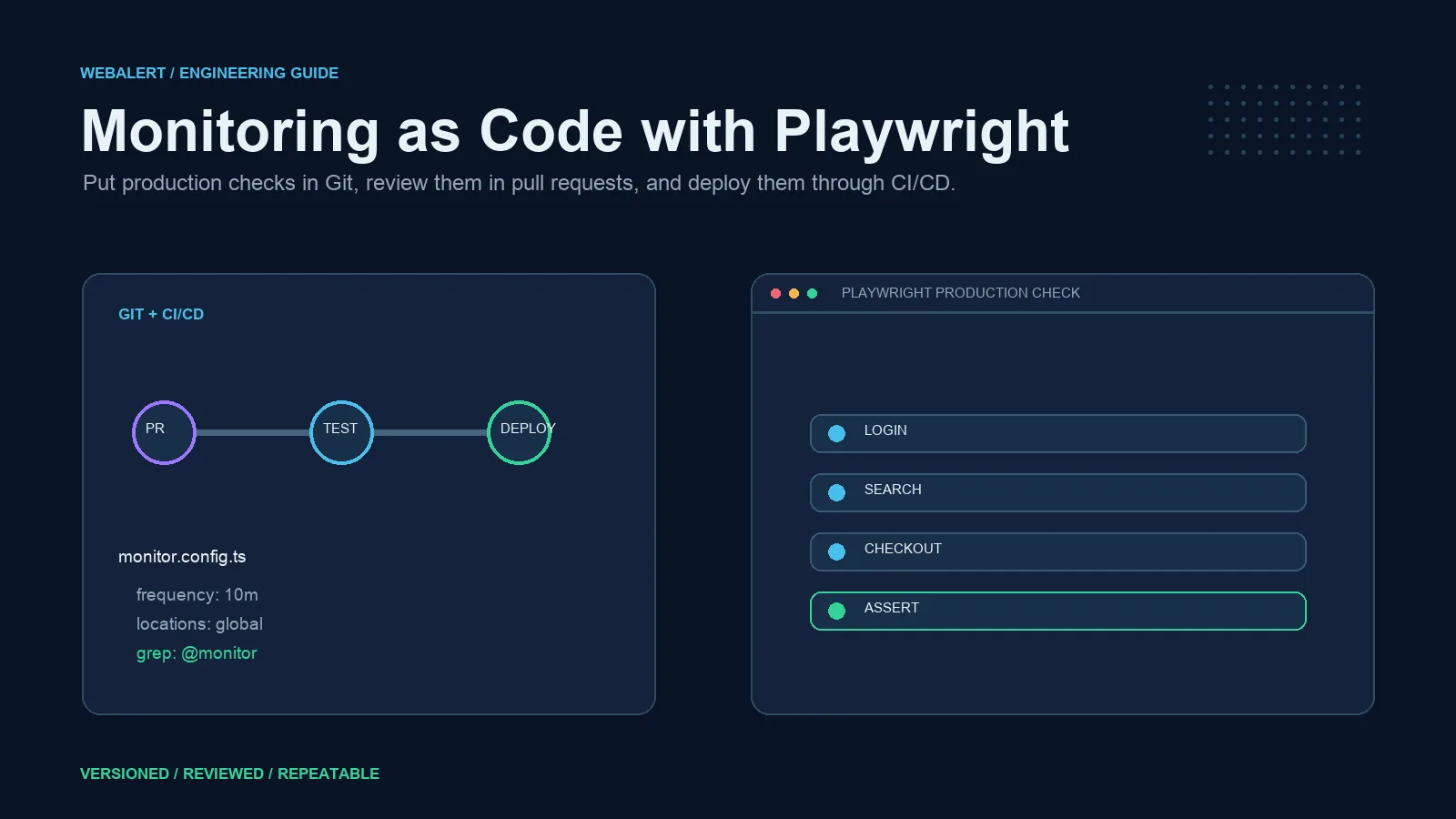
Monitoring as Code With Playwright and CI/CD
Manage production journeys as code with Playwright, GitHub Actions, safe test data, resilient locators, failure traces, deployment review, and alert ownership.

Visual Regression Monitoring: Stable Screenshot Comparisons
Detect layout, font, asset, theme, and overlay regressions with deterministic screenshots, masking, perceptual diffs, and DOM assertions.

Keyword Monitoring: Validate Content Inside 200 Responses
Use must-contain and must-not-contain assertions to catch wrong content, error templates, and soft 404s, with browser checks for client-rendered pages.

Transaction Monitoring: Multi-Step User Journeys
Monitor login, checkout and other multi-step browser journeys with safe test data, stable assertions, diagnostics and maintenance controls.
Dotcom-Monitor Alternative: Match the Test Depth
Compare Dotcom-Monitor alternatives by free limits, real-browser transactions, API checks, locations, retention, pricing, and migration.
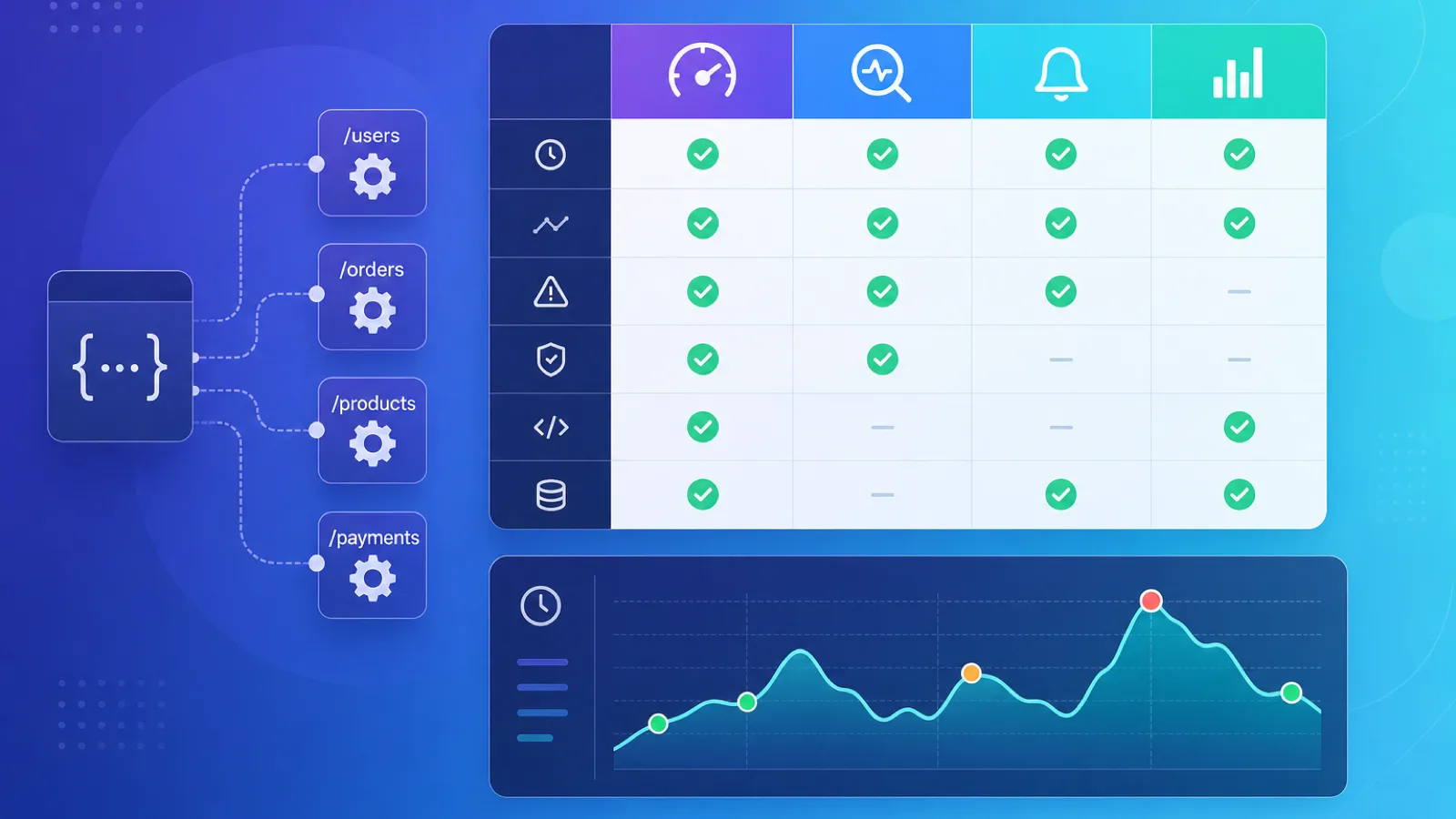
Best API Monitoring Tools 2026: By Test Depth
API monitors compared by ping vs assertions vs Playwright vs APM correlation — Checkly, Postman, Datadog, Webalert (Aug 2026).

Checkly Alternative: Monitoring as Code or Uptime?
Compare Checkly with focused uptime monitoring by Playwright support, API checks, run pricing, CI workflow, incident response, and migration.
React App Monitoring: Availability, Hydration, APIs, and Releases
Monitor a React app's document, bundles, hydration, routes, API dependencies, critical interactions, error boundaries, and deployments.

Active vs Passive Monitoring: Differences and Examples
Compare active synthetic checks with passive production telemetry, understand each method’s blind spots, and build a practical monitoring strategy using both.

Black-Box vs White-Box Monitoring: Key Differences
Compare outside-in black-box checks with internal white-box telemetry, understand their blind spots, and combine both for faster detection and diagnosis.

Synthetic Monitoring vs Real User Monitoring (RUM)
Compare scheduled synthetic tests with real-user monitoring, understand coverage, latency and privacy tradeoffs, and decide when to deploy one or both.

Real User Monitoring (RUM): How It Works and When to Use It
Learn how browser RUM captures Core Web Vitals, errors and real-user context, how to sample and protect privacy, and when synthetic checks are still required.
Site Search Monitoring: Empty Results, Freshness & Relevance
Monitor golden queries, expected URLs, zero-result rate, indexing freshness, latency, locale, permissions, and search conversion.

Login and Authentication Monitoring: Test Sign-In End to End
Monitor login end to end across credentials, sessions, OAuth/OIDC, SAML SSO, MFA, signup, and password reset with safe synthetic accounts and clear alerts.